 By Hamza@globalarena.org
Have you ever searched online for a health condition and ended up with more questions than answers? One website recommends a treatment, another highlights its risks, and a third uses medical language that feels impossible to understand. Finding information is easy; working out what deserves your attention is the harder part.
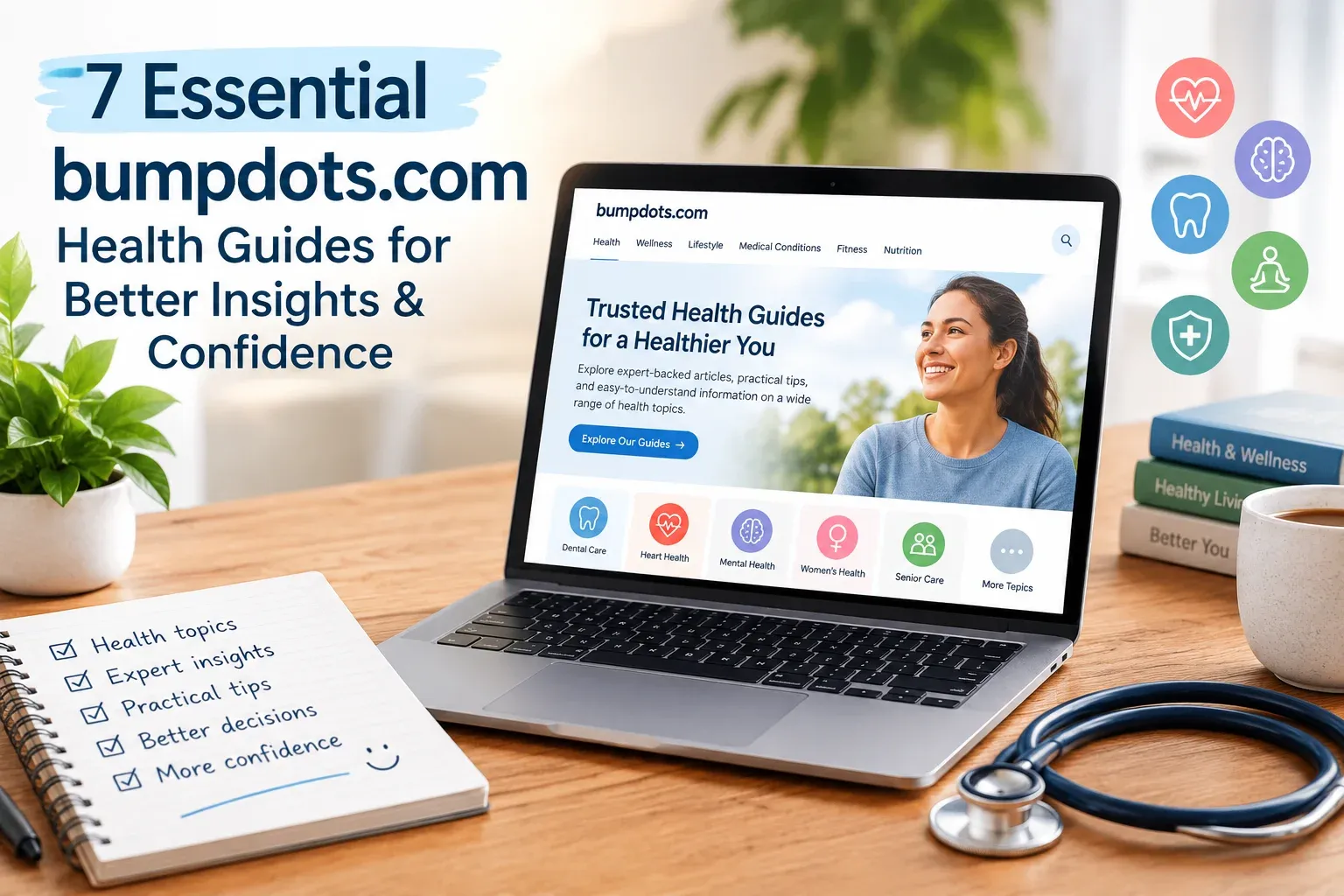
That is where understanding a health publication can help. bumpdots.com is an online health and wellness publication that presents information about medical conditions, treatments, and everyday healthcare in accessible language. Its website covers subjects ranging from dental care and heart health to mental wellbeing, women’s health, and elderly care.
But what can you actually find there, who might benefit from its guides, and how should you judge the information you read? This article explores the website’s main features, explains how to navigate its content, and shares practical ways to check health information before using it to make decisions about your wellbeing.
1. What Is bumpdots.com and What Does It Offer?
When you first visit bumpdots.com, the main idea is straightforward: make health information easier to understand. Rather than presenting itself as a medical clinic, the website describes itself as an independent health and wellness publication offering educational guides for everyday readers.
Its homepage focuses on helping visitors understand health conditions, possible treatments, symptoms, and questions they may want to discuss with a healthcare professional. The content is intended to make unfamiliar medical subjects less intimidating.
According to its website, the publication launched in 2024. Its stated approach emphasizes research, clear explanations, and balanced information rather than dramatic claims or quick fixes.
However, a publication’s description of its own standards should be treated as a starting point, not independent proof of accuracy. Readers should still check the sources, authorship, and evidence behind individual articles.
Who may find the website useful?
The publication may be relevant to several types of readers:
- Patients: People who want a basic explanation of a diagnosis or treatment before an appointment.
- Families and caregivers: Those helping an older parent, partner, or child understand a health concern.
- Students: Learners looking for accessible introductions to medical subjects.
- Everyday readers: People interested in prevention, wellness, symptoms, and healthier routines.
For example, someone preparing for a dental consultation might first read a general explanation of dental implants. They could then write down questions about recovery, possible complications, and treatment costs.
That preparation can make a conversation with a dentist more productive. It does not, however, replace an examination or personalized medical advice.

2. Which Health Topics Can You Explore?
One useful feature of bumpdots.com is its range of health-related categories. Instead of concentrating on one medical specialty, the website organizes guides around several areas that affect individuals and families.
The current website highlights the following subjects.
Dental care
Dental articles cover topics such as implants, gum disease, dental procedures, and everyday oral hygiene. These guides can help readers become familiar with treatment terminology and understand what to ask their dentist.
Suppose you are considering a dental implant. A general guide might explain the basic procedure, healing period, and factors that influence suitability. Your dentist can then assess your bone health, medical history, and individual needs.
Heart health
Cardiovascular information may cover symptoms, diagnostic tests, risk factors, and treatment options. This subject requires particular care because some symptoms can signal an emergency.
Use general articles to build understanding, not to rule out a serious condition. Chest pain, severe breathing difficulty, or other possible emergency symptoms require prompt medical assessment rather than extended online research.
Mental health
Mental wellbeing is another category, including subjects such as stress, anxiety, sleep, and emotional health.
A clear article can help you recognize common experiences and learn about possible support options. However, symptoms can have different causes, and a website cannot determine your diagnosis from a description alone.
Other areas of care
The website also lists subjects including:
- Elderly care and support for caregivers.
- Women’s health and pregnancy-related concerns.
- Urgent care and common reasons for seeking immediate assessment.
- Urology and urinary health.
- Gastroenterology and digestive conditions.
- Orthopedic care, bones, and joints.
- Dermatology and skin conditions.
This range can be helpful when a health question does not fit neatly into one category. You can begin with a broad overview and explore a more specific subject as your questions become clearer.

3. How Does bumpdots.com Approach Health Information?
Health writing needs more than simple language. An article can be easy to read and still be incomplete, outdated, or misleading. What matters is whether the explanation is supported by evidence and gives readers a fair picture of their options.
The website says its editorial process begins with questions readers commonly ask. It describes gathering information from reputable medical sources, explaining the subject in plain English, and reviewing articles for accuracy, balance, and clarity.
These are sensible editorial goals. To assess how well an individual article meets them, look beyond the general description of the publication.
Check the evidence behind an article
Look for links to original research, recognized medical organizations, government health agencies, or established clinical guidance.
For instance, if an article discusses managing high blood pressure, check whether it explains the evidence behind its recommendations and distinguishes established medical guidance from general lifestyle suggestions.
Look for dates and updates
Medical recommendations can change as new evidence becomes available. A guide written several years ago may still explain basic anatomy accurately but contain outdated recommendations about screening or treatment.
Check whether the page identifies when it was published or last reviewed. If the topic changes rapidly, compare it with current guidance from a relevant medical authority.
Understand the limits of editorial claims
The website’s stated commitment to research does not mean every article is automatically suitable for every reader. A balanced assessment considers the specific content, its sources, the writer’s qualifications, and whether important limitations are acknowledged.
This approach is more useful than deciding that an entire website must be reliable or unreliable based on its homepage alone.
4. Is bumpdots.com a Reliable Source of Medical Information?
This is a reasonable question to ask before relying on any health publication. The short answer is that reliability should be assessed article by article, using evidence rather than appearance or marketing language.
A clean design, organized categories, and confident writing can improve the reading experience. None of these features independently proves that a medical claim is correct.
When reviewing bumpdots.com, consider these five checks.
Check the author and qualifications
Look for the author’s name, professional background, and relevant experience. If an article covers a specialist medical subject, ask whether the author has appropriate expertise or whether a qualified clinician reviewed the material.
An author who writes clearly about health is not necessarily qualified to diagnose conditions or recommend treatment.
Look for cited sources
Trustworthy medical explanations should make it possible to trace important claims to credible evidence. If an article makes a strong statement about a treatment, investigate where that statement came from.
Be cautious if important claims appear without references, especially when they involve medication, serious illness, surgery, or treatment outcomes.
Watch for exaggerated promises
Be skeptical of claims that a simple remedy cures a complicated condition, that one treatment works for everyone, or that you should ignore professional advice.
Real healthcare often involves trade-offs. Treatments may offer benefits while carrying risks, and results can vary between individuals.
Compare information with authoritative guidance
Useful reference points include:
- MedlinePlus for evaluating health information.
- NHS for patient-focused health guidance.
- Centers for Disease Control and Prevention for public health information.
Compare the specific recommendation, not just the headline. If reputable sources disagree or the evidence remains uncertain, take that uncertainty seriously.
Protect your personal information
Read a website’s privacy policy before submitting sensitive information. A general health article usually does not require you to share a detailed medical history, identification documents, or payment details.
For a personal diagnosis or treatment decision, use the website as a learning resource and speak with an appropriately qualified healthcare professional.

5. How to Get the Most From Its Health Guides
Reading health information works best when you begin with a clear question. Otherwise, it is easy to move between articles, collect conflicting suggestions, and finish without knowing what to do next.
Here is a simple approach to using bumpdots.com more effectively.
Step 1: Start with the question you need answered
Be specific. Instead of searching for every possible explanation of back pain, you might want to understand the difference between muscular discomfort and symptoms that need medical assessment.
A focused question helps you identify whether an article actually addresses your concern.
Step 2: Read beyond the opening summary
Headlines and introductions are designed to orient you quickly, but they rarely provide the whole picture. Read the sections on causes, assessment, treatment options, and possible limitations.
If the article discusses a treatment, check whether it explains who may benefit, what the risks are, and when professional assessment is necessary.
Step 3: Write down anything you do not understand
You do not need to memorize medical terminology. Keep a short list of unfamiliar words or questions.
For example, before a consultation, you might ask:
- What could be causing my symptoms?
- Which tests, if any, are appropriate?
- What are the available treatment options?
- What benefits and risks should I understand?
- When should I seek further help?
These questions turn general reading into practical preparation.
Step 4: Compare important claims
If an article recommends a particular approach, look for agreement from independent, reputable sources. If the claim concerns medication, surgery, pregnancy, or a serious diagnosis, avoid making decisions based on one webpage.
Step 5: Discuss personal concerns with a professional
Use what you learn to support a conversation with your doctor, dentist, or other qualified practitioner. Share your symptoms, relevant medical history, and questions.
The professional can consider details that a general article cannot assess, including examination findings, existing conditions, medications, and personal risk factors.

6. What Makes Online Health Information Helpful?
A useful health article does more than define a condition. It helps you understand the issue without creating unnecessary fear or giving you false confidence.
The strongest guides generally have several characteristics.
Clear explanations: Medical terms are introduced in ordinary language, with enough detail to help readers understand the subject.
Balanced information: Benefits, risks, alternatives, and limitations receive appropriate attention.
Transparent sourcing: Readers can identify the evidence supporting important claims and check it independently.
Relevant authorship: Writer credentials and medical review arrangements are explained where appropriate.
Practical next steps: The article helps readers decide what to discuss with a professional or where to find authoritative guidance.
Responsible boundaries: General education is clearly distinguished from diagnosis, prescriptions, and individualized treatment.
These standards matter because health decisions can have real consequences. The MedlinePlus guide to evaluating health information recommends checking who operates a website, where its information comes from, how content is reviewed, and whether it is current.
Google’s guidance on helpful, reliable, people-first content also emphasizes clear authorship, trustworthy presentation, and meaningful value for readers. Search visibility alone is not proof of medical accuracy.
7. Advantages and Limitations to Keep in Mind
Every information source has strengths and limitations. Understanding both helps you decide when a general publication is useful and when you need a more specialized resource.
Potential advantages
- Accessible language: Straightforward explanations can make unfamiliar subjects easier to understand.
- Multiple health categories: Readers can explore related subjects without beginning a new search every time.
- Appointment preparation: General information may help you identify useful questions for a clinician.
- Convenient access: Online guides can be read when you have time to learn about a topic.
- A starting point for research: An introductory article can help you identify terminology and locate more authoritative sources.
These are potential benefits of the format. Whether a particular article delivers them depends on its actual quality.
Limitations to remember
- General articles cannot examine you or establish a diagnosis.
- Health information may become outdated.
- A guide may not cover every risk, alternative, or personal circumstance.
- Search results can contain incomplete or conflicting explanations.
- Information that applies to one patient may not apply to another.
For example, two people with similar knee pain may need different assessments because of their age, medical history, activity levels, and symptoms. A general article can explain common possibilities, but it cannot determine the appropriate treatment for both individuals.
The safest approach is to combine accessible reading with professional guidance when your health is at stake.
FAQs: bumpdots.com
1. What is bumpdots.com?
It is an online health and wellness publication that provides general educational guides about medical conditions, treatments, and everyday health. Its listed topics include dental care, heart health, mental wellbeing, women’s health, and elderly care. Readers should evaluate individual articles and verify important medical claims with credible sources.
2. Is bumpdots.com a medical clinic?
No. The website presents itself as a health information publication, not a clinic offering individual diagnosis or treatment. Reading its guides may help you prepare for an appointment, but it cannot replace an examination, personalized medical advice, or treatment from an appropriately qualified healthcare professional.
3. Is the information on bumpdots.com reliable?
Reliability depends on the individual article. Check the author’s qualifications, publication or review date, cited medical sources, and whether the explanation acknowledges risks and limitations. Compare important claims with established health authorities before using them to make decisions about medication, treatment, or a serious medical condition.
4. What health topics does bumpdots.com cover?
The website lists dental care, cardiology, mental health, elderly care, urgent care, women’s health, urology, digestive health, orthopedics, and dermatology among its subjects. Its guides are intended to explain common questions and help readers understand healthcare topics in accessible language.
5. Can I use bumpdots.com to diagnose my symptoms?
No. General health articles cannot assess your medical history, perform an examination, or order appropriate tests. You can use educational information to prepare questions and understand possible explanations, but seek professional assessment for persistent or concerning symptoms. For a suspected medical emergency, contact local emergency services immediately.
Conclusion
Understanding a health topic should leave you better prepared, not more confused. bumpdots.com offers an online starting point for exploring subjects such as dental care, heart health, mental wellbeing, elderly care, and other areas of everyday healthcare.
Its stated aim is to make medical information easier to understand through research-based, reader-friendly guides. As with any health publication, though, the value of an article depends on its sources, accuracy, date, and treatment of important limitations.
Before relying on a recommendation, check who wrote the article, whether credible references support its claims, and whether the information reflects current medical guidance. Compare important advice with established health organizations, and bring questions about your own symptoms or treatment to a qualified professional.
You do not need to become a medical expert to research your health more carefully. Start with one question, read the relevant guide, verify the information that matters, and write down what you still need to ask.
That simple habit can help you become a more informed participant in your healthcare decisions while keeping professional advice where it belongs: at the center of your personal care.