 By Hamza@globalarena.org
Have you ever come across an unusual family name and wondered where it came from? Some surnames have straightforward meanings, while others carry stories connected to geography, occupations, migration, and family traditions. Peitner is one such name that deserves a closer look.
The surname has associations with German-speaking Central Europe, particularly Austria and Bavaria. However, its history is more interesting than a single geographical explanation. Established surname research identifies two possible linguistic origins, including a topographic connection and a separate occupational interpretation.
Understanding these possibilities can help you explore family connections without jumping to conclusions. In this guide, we will examine the name’s meaning, historical background, regional associations, spelling variations, and practical ways to investigate your ancestry.
1. What Does Peitner Mean?
A surname can tell us something about the people, places, and occupations that existed when family names became established. However, the same surname does not always have one universal meaning.
According to FamilySearch, which references the Dictionary of American Family Names, Peitner has two possible explanations.
The first is a German and Austrian topographic interpretation. The second comes from Ashkenazic Jewish naming traditions and has an occupational connection.
The geographical interpretation
One explanation connects the surname with the Middle High German word līte, referring to a mountain slope or spur.
In this interpretation, the name may have described someone who lived near sloping or elevated land. Geographic surnames were common throughout Europe because communities often identified people by their surroundings.
For example, someone living near a hill, river, forest, or mountain could acquire a name associated with that location.
The occupational interpretation
A separate explanation connects the name with the Yiddish word leytn, meaning to solder.
Soldering involves joining metal pieces using a material that melts and creates a connection between them. It is a traditional skill associated with metalworking and repair.
Under this interpretation, the surname may have identified someone who performed soldering work or belonged to a family connected with that trade.
These explanations may represent different family lines. It would be incorrect to assume that every person carrying the name shares the same occupational or geographical background.
2. The Historical Origin of the Peitner Surname
To understand an old surname, it helps to look beyond its modern spelling.
Many European family names developed gradually. People were identified through their occupations, places of residence, personal characteristics, or relationships. Over generations, these descriptions became inherited family names.
German-speaking regions of Central Europe provide an important starting point for investigating this particular surname.
Bavaria and Austria are specifically mentioned in established surname references. These areas have long histories of rural settlements, agricultural communities, trade, migration, and changing political boundaries.
How family names developed
During earlier centuries, a person might have been known by a first name and an additional description.
For example:
- A person living near a mountain could be identified by their geographical surroundings.
- A skilled worker might become associated with their occupation.
- Someone moving between villages might be distinguished by their previous place of residence.
- Children could inherit a family identifier that eventually became a permanent surname.
This process explains why European surnames often contain clues about historical communities.
Why historical records matter
Written documents help researchers distinguish between a surname’s possible meaning and the actual history of a particular family.
A surname dictionary offers linguistic explanations, but it cannot tell you exactly where your great-grandparents lived.
For that, you need supporting documents such as baptism records, marriage certificates, property documents, and census information.
FamilySearch provides historical genealogy collections that can help researchers begin this process.
3. Peitner Family History Across Central Europe
Family history is not simply about identifying the country associated with a surname. It involves understanding how families lived, moved, worked, and maintained relationships across generations.
Central Europe is particularly interesting because its political and administrative boundaries changed repeatedly.
A family living in one village might have appeared in records belonging to different states or administrative systems over several generations.
Austria and Bavaria
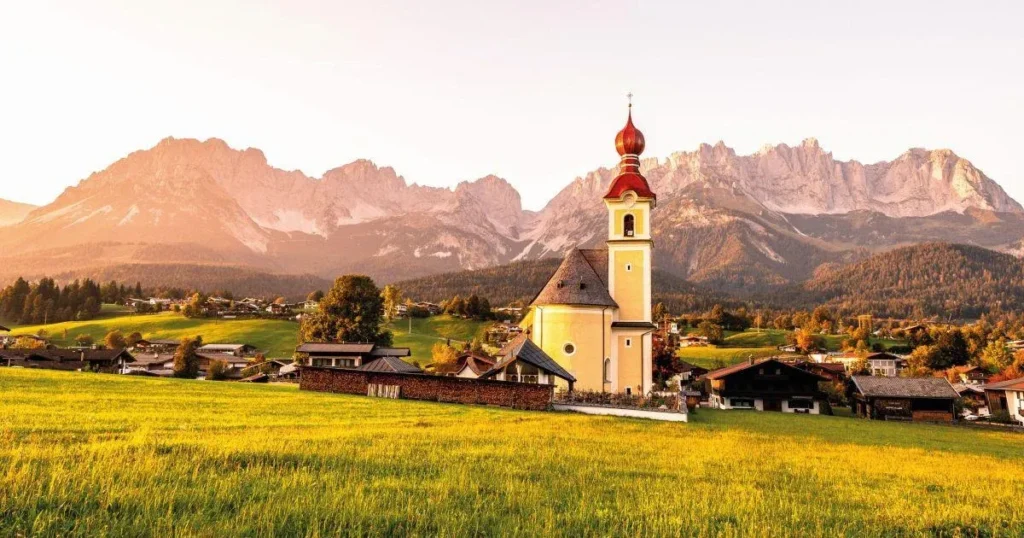
Austria and Bavaria are two important geographical starting points because established surname research specifically associates the name with these regions.
Both areas have long histories of agriculture, craftsmanship, local commerce, and village communities.
In earlier periods, families often remained connected to particular settlements for generations. Church records, property documents, and local administrative registers can therefore provide valuable information.
The Tyrol connection
Tyrol is another useful region to investigate.
The official Tyrolean government maintains a historical surname reference that lists Peitner in Innsbruck and Kufstein. It also lists related-looking spellings, including Peithner and Peintner, in other locations.
This provides useful regional evidence, although it does not establish that every family with these names shares one ancestry.
Migration and family connections
Migration can make genealogy more complicated.
A family might move from a rural Austrian community to another European country, then eventually settle in North America or elsewhere.
During these journeys, names could be written differently by officials, religious institutions, or immigration authorities.
A researcher might therefore find different spellings across birth certificates, marriage documents, passenger lists, and later census records.
The best approach is to investigate the complete family line rather than relying on a surname alone.
4. Is Peitner a German or Austrian Family Name?
This is a reasonable question because surnames often become associated with a particular nationality.
The available linguistic evidence connects the name with German-speaking areas, particularly Bavaria and Austria. However, that does not mean every family using it has German or Austrian citizenship, nationality, or ancestry.
A surname can survive long after a family leaves its original homeland.
Understanding Central European identity
Central Europe has experienced centuries of cultural and political change.
Modern national borders do not always match the boundaries that existed when historical documents were created.
For example, a family could have lived in a German-speaking community in a territory that is now part of another country.
This is why researchers should pay attention to historical place names, local languages, and administrative divisions.
What can the surname tell you?
The name can provide a starting point for research, particularly if your family has stories about Austrian or Bavarian relatives.
However, it cannot independently confirm:
- Your ancestors’ exact birthplace.
- Their nationality or citizenship.
- Their religious background.
- Their occupation.
- Their connection to a particular historical family.
For stronger conclusions, compare several independent documents and make sure the names, dates, and relationships match.
5. Understanding the Possible Ashkenazic Jewish Connection
One particularly interesting aspect of the surname is its separate Ashkenazic Jewish occupational explanation.
FamilySearch identifies a possible connection with the Yiddish word leytn, meaning to solder.
This interpretation is important because it shows how the same or similar surname can develop independently in different linguistic and cultural communities.
What does Ashkenazic mean?
Ashkenazic Jewish communities historically developed across parts of Central and Eastern Europe.
Their languages, naming customs, religious traditions, and migration patterns influenced family history throughout the region.
Occupational surnames were among the naming traditions found in these communities.
Names associated with trades could reflect work performed by an ancestor or a description used by the wider community.
Does the name prove Jewish ancestry?
No.
Finding this possible origin does not establish that an individual or family is Jewish.
The surname dictionary presents a linguistic possibility, not a certificate of religious identity or family descent.
If you are investigating a possible Jewish family connection, look for supporting evidence in historical synagogue registers, civil records, cemetery inscriptions, immigration documents, and other reliable sources.
It is also worth remembering that families may have changed religions, languages, or cultural practices over time.
Careful research is more useful than assuming an identity based on spelling.
6. Understanding Peitner and Similar Surnames
One challenge in European genealogy is that similar-looking names can appear in historical documents.
Handwriting, pronunciation, regional spelling practices, and administrative changes can all affect how a surname is recorded.
Peitner, Peithner, and Peintner are particularly relevant examples.
Peitner and Peithner
An Austrian archival database contains an entry for Joseph Anton Peithner that includes the alternative forms Peitner and Peintner.
The entry is dated July 5, 1742, and relates to an official connected with the church chapter in Innichen in the Puster Valley.
This is useful historical evidence that these forms appeared together in a particular archival context.
However, one historical entry does not prove that every family with these spellings is related.
Peitner and Peintner
The Tyrolean surname directory lists Peitner and Peintner separately, with different recorded localities.
This distinction matters when searching historical documents.
If you only search one spelling, you might miss relevant records. On the other hand, combining every similar spelling without checking family relationships could produce incorrect ancestry connections.
How to search different spellings
Try searching for:
- Peitner
- Peithner
- Peintner
Compare the results using dates, locations, parents’ names, spouses, and occupations.
A genuine spelling variation should fit the wider family evidence rather than simply looking similar.
7. How Rare Is the Peitner Surname?
Uncommon surnames often create an interesting research experience.
You may find fewer references than you would for a widely distributed family name, but individual records can sometimes provide useful clues.
FamilySearch displays 20,479 records associated with this surname in its historical collections.
It also displays a small number of people in its collaborative family tree, including five in Hungary, four in Germany, and two in Croatia.
These figures require some explanation.
They are database figures, not a worldwide population census. Historical records may contain repeated references to the same person, and collaborative family trees represent only the information users have submitted.
Why rarity can make research difficult
An uncommon name does not guarantee that its history will be easy to discover.
Older documents may be incomplete, damaged, difficult to read, or unavailable online.
A family might also have moved between regions where different languages were used for official paperwork.
Why rarity can help
A distinctive surname can sometimes make it easier to narrow down potential records.
If you know a relative’s approximate birthplace and birth year, searching a less common surname alongside those details may produce more focused results.
Still, never assume that two people are related simply because they share an unusual surname.
8. How to Research Your Family History
If you carry this surname or are researching someone who did, you can begin with a few practical steps.
You do not need expensive software or professional genealogy services to start.
The most valuable resource is often information already held by your family.
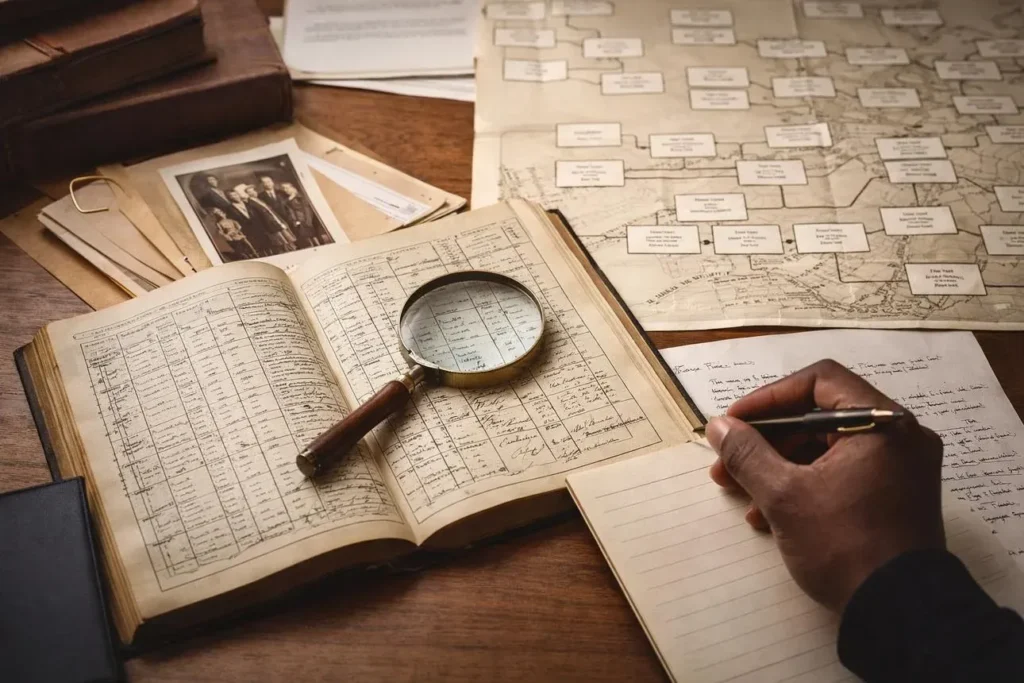
Step 1: Speak with older relatives
Begin by asking parents, grandparents, aunts, uncles, and other relatives what they know.
Try to collect:
- Full names of parents and grandparents.
- Approximate birth and marriage dates.
- Previous family addresses.
- Names of villages or towns.
- Immigration or migration stories.
- Family photographs and certificates.
Write down where each piece of information came from.
A relative’s memory can provide an excellent research lead, but it should eventually be compared with historical evidence.
Step 2: Build a basic family tree
Start with yourself and work backward.
Add parents, grandparents, and great-grandparents where information is available.
Record dates and locations separately. Avoid filling missing spaces with guesses.
A simple spreadsheet or family tree chart is enough for an initial project.
Step 3: Search historical documents
Useful sources include:
- Birth and baptism records.
- Marriage registers.
- Death certificates.
- Church records.
- Immigration and passenger lists.
- Census documents.
- Military records.
- Property and land registers.
For Central European research, the relevant local archive may be more useful than a general internet search.
Step 4: Compare multiple sources
Suppose you discover a person with the same surname who lived in Austria during the nineteenth century.
Before adding that individual to your family tree, check whether their age, parents, spouse, and residence match your known relatives.
One matching surname is not enough.
Step 5: Keep track of uncertainty
Use labels such as confirmed, probable, and unverified.
This makes your research easier to understand and prevents an attractive family story from being mistaken for established fact.
9. Historical Records and Online Genealogy Resources
Online archives have made family research more accessible than it once was.
Researchers can now investigate many historical documents without travelling immediately to the locations where their ancestors lived.
However, different databases serve different purposes.
FamilySearch
FamilySearch offers historical records, family tree tools, and surname information.
It is a useful starting point for locating birth, marriage, death, immigration, and other genealogical documents.
Remember that collaborative family trees can contain mistakes, so verify important details against original records whenever possible.
Tyrolean State Archives
The official Tyrolean government website offers a surname directory and historical research information.
Its surname reference identifies Peitner in Innsbruck and Kufstein.
This makes it a useful resource when investigating possible family connections in Tyrol.
Austrian State Archives
The Austrian archival information system can help researchers locate historical documents relating to individuals, families, occupations, and official appointments.
Its historical entry mentioning Peithner, Peitner, and Peintner demonstrates why archival searching should include spelling alternatives.
Organizing your discoveries
As you collect information, create a research folder for each generation.
Keep digital copies of certificates, photographs, and archive references.
Include the document’s source, date, location, and any uncertainties.
This simple habit makes it much easier to revisit your findings later.

10. Common Misconceptions About the Name
Unusual surnames often attract explanations that sound interesting but lack supporting evidence.
A careful approach helps separate established information from speculation.
A surname does not establish a complete family history
The same surname can develop independently in different communities.
Therefore, two people with the same name are not automatically distant cousins.
Similar spellings do not always indicate identical ancestry
Historical records can show spelling variations, but researchers must establish relationships using family documents.
A family crest is not automatically shared by everyone
You may find websites advertising coats of arms associated with particular surnames.
However, heraldic rights historically belonged to specific individuals or family lines, not automatically to everyone who shares a surname.
If you discover a supposed family crest, investigate its original historical owner and documented descendants.
Modern online descriptions need verification
Some websites use unusual surnames as the subject of articles about technology, software, or digital platforms.
Such descriptions should not be treated as established facts without official documentation or reliable independent evidence.
The strongest available references identify this name in the context of surname history and genealogy.
11. Why Family Heritage Deserves Attention
Family history can connect present generations with people whose lives were shaped by very different circumstances.
A simple document might reveal where an ancestor lived, what work they performed, whom they married, or when they moved to another country.
These details can make an otherwise unfamiliar family story feel much more personal.
Researching an old surname also helps preserve information that might otherwise disappear.
Older relatives may remember village names, family traditions, or migration stories that are not recorded anywhere online.
Taking the time to document those memories gives younger generations something meaningful to explore.
The goal is not to create an impressive story at any cost. It is to understand what the available evidence genuinely tells us.
FAQs: Peitner
1. What does Peitner mean?
The surname has two possible explanations in established surname research. One connects it with a Middle High German term for a mountain slope or spur. Another identifies an Ashkenazic Jewish occupational origin connected with soldering.
2. Is Peitner an Austrian surname?
It has documented associations with Austria and Bavaria. The Tyrolean government also lists the surname in Innsbruck and Kufstein. However, a surname’s regional association does not establish the nationality of every person who carries it.
3. Are Peitner and Peintner the same family name?
They may appear as related spelling forms in certain historical records. An Austrian archival entry from 1742 lists Peithner alongside Peitner and Peintner. However, individual family relationships still need to be established through genealogical evidence.
4. How can I find my Peitner ancestors?
Start by collecting information from relatives and building a basic family tree. Then search birth certificates, marriage records, church registers, immigration documents, and regional archives. FamilySearch and the Tyrolean State Archives are useful starting points.
5. Does the surname have a family coat of arms?
There may be historical heraldic references associated with particular individuals or family branches. However, sharing a surname does not automatically give someone a right to use a particular coat of arms. Verify the historical owner and family connection before accepting a heraldic claim.
Conclusion
Exploring an uncommon family name can reveal much more than its spelling or pronunciation. It can introduce you to historical languages, regional communities, traditional occupations, and the movement of families across generations.
Peitner has two possible explanations in established surname research: a German and Austrian geographical connection and a separate Ashkenazic Jewish occupational interpretation. Historical references also show related spellings, making careful document research especially useful.
If you are investigating your own ancestry, begin with what your family already knows. Collect names, dates, photographs, and locations before moving on to online databases and historical archives.
Most importantly, treat every discovery as a clue rather than an automatic answer. Compare documents, verify relationships, and keep track of uncertain details.
A good next step is to speak with an older relative and write down everything they remember about your family’s earliest known hometown. That small conversation could give you the starting point for a much bigger historical discovery.