 By Hamza@globalarena.org
Have you ever come across an unfamiliar word online and wondered whether it has a genuine meaning or is simply a spelling mistake? That is exactly the kind of curiosity that makes unusual terms interesting. Çbiri is one such expression. Its spelling raises questions about language, pronunciation, possible cultural connections, and how unfamiliar words spread across the internet.
The interesting part is that there is no widely established dictionary definition for this exact spelling. However, that does not mean there is nothing useful to explore. Its individual letters and similarities to Turkish vocabulary provide a starting point for understanding where the confusion might come from. In this guide, we will examine its possible meaning, linguistic connections, spelling variations, online presence, and the importance of checking information before accepting an unfamiliar definition.
1. What Is Çbiri?
When people encounter a word they have never seen before, their first instinct is usually to search for a definition. However, not every combination of letters represents an established word in a recognized language.
The same applies here. Çbiri does not have a clearly verified, universally accepted definition in standard Turkish dictionaries or widely recognized English dictionaries. This makes it different from familiar vocabulary that has a documented meaning, spelling, and grammatical role.
There are several possible reasons why someone might encounter this expression:
- It could be a username or personal online identity.
- It might be a newly created expression used within a particular community.
- It could result from a typing or spelling mistake.
- It may be connected to another word that looks or sounds similar.
- It could appear in a website, brand name, or informal digital conversation.
These possibilities should not be confused with confirmed explanations.
Why does the spelling attract attention?
The first letter is particularly interesting because Ç is used in several languages, including Turkish. It is not simply an ordinary C with decoration. It represents a distinct sound.
The remaining letters also resemble familiar Turkish vocabulary. However, recognizing individual letters does not automatically establish the meaning of the complete expression.
A useful approach is to examine the word in context. Where did you find it? Was it inside a Turkish sentence, a social media profile, a website, or a discussion about language? That surrounding information may provide clues that the spelling alone cannot offer.
2. What Does Çbiri Mean?
The most honest answer is that its exact meaning has not been reliably established.
You may find online articles presenting different explanations. Some associate unfamiliar expressions with cultural identity, creativity, personal development, or traditional language. Others suggest that they originated from a typing mistake or an alternative spelling.
The difficulty is that these explanations are not automatically supported by linguistic evidence.
To understand the possible meaning, it helps to separate three things:
Established meaning: A definition supported by recognized dictionaries, linguistic references, or documented usage.
Possible interpretation: An explanation based on spelling similarities, context, or language patterns.
Online speculation: A claim repeated on websites without reliable supporting evidence.
This distinction matters because readers sometimes encounter an interesting explanation and assume it must be historically accurate.
For example, if someone uses an unusual combination of letters as a username, it might have personal meaning to that individual. Another person could use the same spelling for an entirely different reason.
Therefore, there is no reason to assume that every online appearance refers to one shared concept.
Could its meaning change over time?
Yes, potentially. Language develops through everyday communication. People create expressions, shorten phrases, combine words, and introduce new vocabulary through online communities.
A term that initially appears in a small group might eventually become familiar to a wider audience. However, widespread recognition and an established dictionary definition are two different things.
For now, its meaning should be treated as uncertain rather than presented as a confirmed translation.
3. Is Çbiri a Real Turkish Word?
This is one of the most interesting questions because the spelling contains a character associated with Turkish.
The Turkish alphabet has 29 letters, including Ç, Ş, Ğ, and several other characters that distinguish Turkish pronunciation and spelling.
However, the presence of a Turkish letter does not prove that an entire expression belongs to the Turkish language.
Consider a simple example. Someone could combine letters from the English, Turkish, and French alphabets to create a username. The result might look like a word from one language without actually being recognized vocabulary in that language.
The same caution applies when examining this expression.
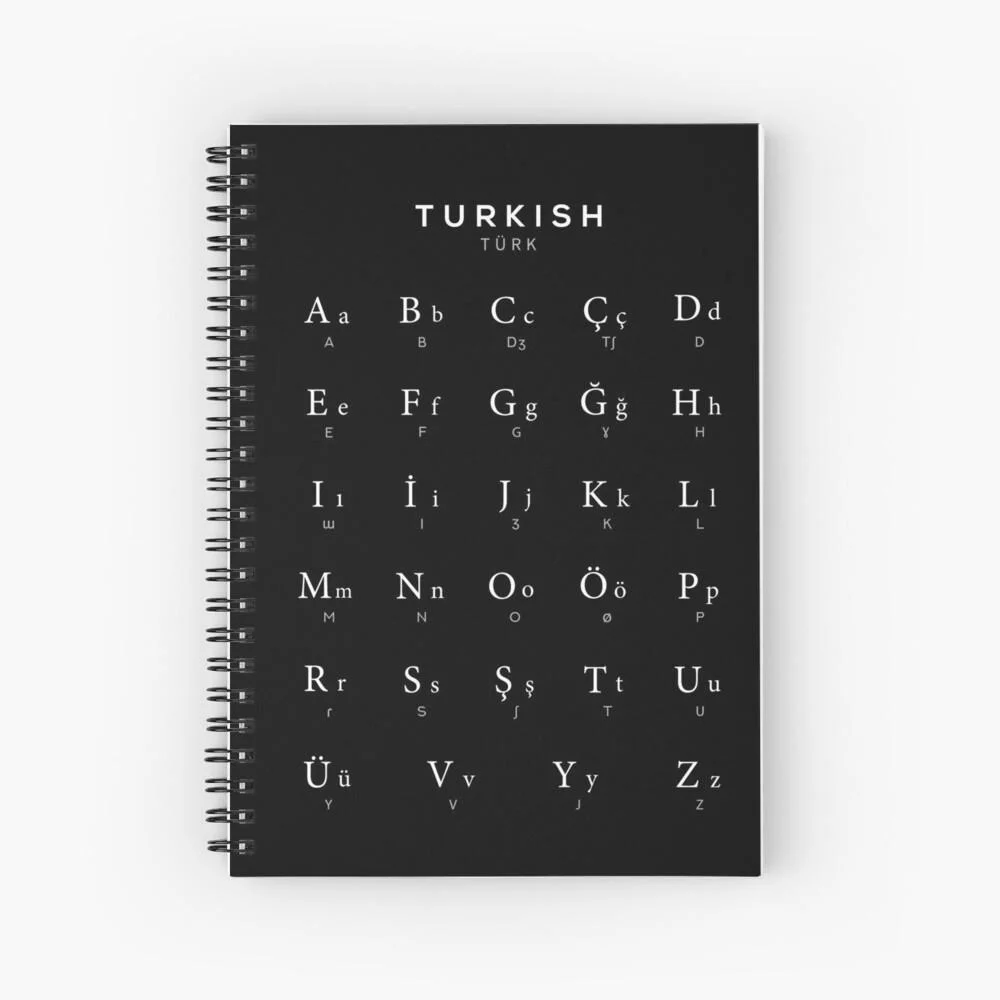
Understanding the Turkish letter Ç
In Turkish, Ç generally represents the sound /tʃ/, similar to the beginning sound in the English word chair.
Here are a few familiar Turkish examples:
- Çay – tea.
- Çocuk – child.
- Çiçek – flower.
- Çanta – bag.
- Çorap – sock.
These examples show that Ç is a normal part of Turkish spelling.
What about the word biri?
The separate Turkish word biri is genuine vocabulary. Depending on context, it can mean someone, somebody, or one of them.
For example, the sentence Biri geldi means “Someone came.”
This is useful linguistic information, but it does not establish that the complete spelling is a standard Turkish word.
If you are researching the term for language-learning purposes, consult the Turkish Language Association’s dictionary rather than relying entirely on informal blog explanations.
4. The Connection Between Çbiri, Biri, and Çeviri
Sometimes two words look similar enough to create confusion, even when their meanings are completely different. This is especially common when people search for unfamiliar vocabulary using keyboards that do not support every language character.

There are two Turkish words worth understanding when exploring this spelling: biri and çeviri.
Understanding the word biri
In Turkish, biri generally refers to someone, somebody, or one person from a group.
For example:
- Biri aradı. – Someone called.
- Biri burada. – Someone is here.
- Biri bana yardım etti. – Someone helped me.
These are ordinary examples of Turkish usage. They help explain why the ending of the unfamiliar expression might look familiar to Turkish speakers.
However, a familiar word appearing inside an unfamiliar combination does not automatically give the combination a recognized meaning.
Understanding the word çeviri
The Turkish word çeviri means translation. It describes the process of converting spoken or written information from one language into another.
For example, imagine that you have an English article and want to make it understandable to Turkish-speaking readers. Translating that article into Turkish is called çeviri.
The word is commonly relevant to:
- Language learning.
- Translated books and documents.
- Website localization.
- Movie subtitles.
- Business communication.
- Educational materials.
Could someone accidentally type the unusual spelling when intending to write çeviri? Yes, that is possible in an individual search or message.
However, the two spellings should not be treated as interchangeable. The correct word for translation is çeviri, not the unfamiliar spelling discussed here.
5. Where Did Çbiri Originate?
The exact origin remains uncertain. There is no sufficiently documented historical record identifying its creator, first appearance, or original language.
This is where online research can become confusing. Different websites sometimes present different explanations, and readers may struggle to determine which one deserves attention.
Some sources suggest a Turkish connection because of the letters and familiar vocabulary. Others mention possible Albanian linguistic connections. Still others describe the expression as an internet-created name.

Could it have an Albanian connection?
Albanian uses the letter Ç, which represents a sound similar to the English “ch” sound.
One proposed explanation connects the spelling with the Albanian phrase çfarë bëri?, approximately meaning “what did he or she do?”
Although this is an interesting linguistic possibility, there is not enough historical evidence to establish that the phrase developed into the exact spelling being researched.
A similar-looking phrase is not proof of a shared origin. Researchers generally need documented examples, historical records, and evidence of how a term changed over time before confirming its etymology.
Could it be a modern invention?
Another possibility is that someone created the expression for a particular purpose.
People invent unusual names for all kinds of reasons. A gamer might want a distinctive username, a designer might create a name for a project, or a website owner might choose a memorable combination of letters.
These names do not always have traditional meanings.
Without an original creator or documented explanation, it is better to leave the historical question open than to attach an unsupported story to it.
6. How Is Çbiri Used Online?
The internet gives unfamiliar expressions a way to travel beyond their original audience. A word can appear in a comment, username, article, or search result and attract attention from people who have never encountered it before.
That does not necessarily mean the expression has become part of everyday language.
There are several contexts in which an unusual spelling might appear.

Social media and usernames
Social media users often choose distinctive names to make their profiles easier to recognize. Some prefer ordinary names, while others combine letters, numbers, and unusual characters.
A name does not need a dictionary definition to work as a username.
If you encounter the expression in a profile, the account owner’s explanation is likely to be more useful than a general article attempting to assign a universal meaning.
Websites and blogs
Another place unfamiliar expressions appear is on informational websites.
When a keyword attracts searches, publishers may create articles explaining its possible meaning, background, and uses. This can make the term easier to discover.
However, there is a difference between a website discussing a word and a website proving its linguistic history.
For example, ten websites repeating the same unverified explanation do not provide ten independent pieces of evidence.
Digital communication
People also use informal language in text messages, online communities, gaming conversations, and discussion forums.
An unfamiliar expression might have a special meaning within a small group. Someone outside that group may not understand it without additional context.
This is why the sentence surrounding a word can be more useful than the word itself.
Search engine visibility
Search engines make it possible to discover unusual terms quickly. When people repeatedly search for a particular spelling, more websites may publish explanations about it.
But search visibility is not the same as linguistic recognition.
A word can attract considerable curiosity without having an accepted dictionary definition.
7. Çbiri vs. CBIRI: Understanding the Difference
Capitalization and special characters can make similar-looking terms confusing.
One important distinction is between the accented spelling and the uppercase acronym CBIRI.
An acronym is created from the initial letters of a longer name. It may refer to an organization, institution, technical project, or professional initiative.
The spelling CBIRI should therefore be interpreted according to the document or organization in which it appears.
By contrast, the accented spelling has no confirmed universal definition.
Here is a simple comparison:
| Feature | Çbiri | CBIRI |
|---|---|---|
| First character | Ç | C |
| Format | Unusual word-like spelling | Uppercase abbreviation |
| Established universal meaning | Not confirmed | Depends on the organization |
| Possible usage | Name, typo, or invented expression | Institutional or technical acronym |
| Context required | Yes | Yes |
The main lesson is simple: never assume two terms are identical just because their letters look similar.
If you encounter CBIRI in a research paper, institutional document, or professional website, check the full name provided by the original organization.
8. Why Is Çbiri Appearing in Online Searches?
An unfamiliar expression can attract attention for several reasons.
Sometimes people encounter it accidentally. At other times, they see it mentioned in an article and want to understand its meaning.
Search engines can also make unfamiliar spellings more noticeable by displaying pages that discuss the same topic.
Here are some possible reasons for curiosity:
Unusual spelling: The letter Ç immediately attracts attention among readers who mainly use English.
Language confusion: Readers may recognize part of the spelling and wonder whether it belongs to Turkish, Albanian, or another language.
Typing mistakes: Someone searching for a familiar word might accidentally enter a different combination of letters.
Repeated online references: When multiple articles discuss the same unusual term, readers may become curious about its background.
Personal or creative names: A user might discover the expression through a username, project, or website.
One thing worth remembering is that online visibility does not prove historical importance, cultural significance, or widespread everyday usage.
9. How to Research Unfamiliar Words Correctly
If you regularly come across unfamiliar vocabulary, learning how to verify it can save you considerable time.
You do not need advanced linguistic training. A few simple research habits can help you distinguish reliable definitions from unsupported explanations.
Step 1: Check an official dictionary
Start with a recognized dictionary for the language you suspect.
For Turkish vocabulary, the Türk Dil Kurumu Official Dictionary is a useful starting point.
Search the complete spelling first. If nothing appears, try searching the individual parts separately.
Step 2: Compare the spelling
Check whether the expression might be a typo, an abbreviation, or a variation of another established word.
Pay attention to special characters because replacing one letter can change pronunciation and meaning.
For example, Turkish distinguishes C from Ç. They should not be treated as interchangeable.
Step 3: Look at the original sentence
A word found in a social media username requires a different interpretation from one found in a formal document.
Read the complete sentence and identify the subject being discussed.
This can help you understand whether the term is a name, technical abbreviation, or ordinary vocabulary.
Step 4: Find the earliest available reference
If someone claims that a word has an ancient origin, ask where it was first recorded.
A credible historical explanation should ideally include documentary evidence, a publication, or a recognized linguistic reference.
A modern blog repeating an interesting story is not enough.
Step 5: Compare independent sources
Do not rely on one article, especially when its explanation is not supported by a dictionary or other reliable reference.
Look for agreement between independent sources and check whether they provide actual evidence.
This method is useful not only for unfamiliar vocabulary but also for researching names, acronyms, cultural expressions, and internet terminology.
10. Common Mistakes to Avoid When Understanding Unfamiliar Terms
It is easy to accept the first explanation that appears in a search result. However, unusual vocabulary deserves a little more investigation.
Here are some common mistakes worth avoiding:
- Assuming every unusual spelling is a traditional word: Some expressions are invented recently or created for personal use.
- Confusing similar-looking words: A small spelling difference can completely change a word’s identity.
- Trusting unsupported historical claims: Cultural and historical explanations need evidence.
- Treating repeated articles as independent proof: Several websites may repeat information from the same original source.
- Ignoring the surrounding context: The meaning of an unfamiliar expression may depend on where it appears.
For instance, someone researching Turkish vocabulary should not assume that a term is Turkish simply because it contains the letter Ç.
The same principle applies to acronyms, internet slang, usernames, and brand names. Always look at the original source before deciding what a particular expression means.
FAQs: Çbiri
1. What does çbiri mean?
There is no universally accepted dictionary definition for this spelling. It may be a creative name, an online expression, a username, or a typing mistake. Its intended meaning depends on the original context in which someone uses it.
2. Is it a genuine Turkish word?
The complete spelling is not established as a standard Turkish vocabulary word. However, Turkish uses the letter Ç, and biri is a genuine word meaning someone or one of them. These separate facts do not establish the combined expression.
3. Is it the same as çeviri?
No. Çeviri is an established Turkish word meaning translation. The two spellings are different. Someone might accidentally type one when intending the other, but that possibility does not make them interchangeable.
4. How should I pronounce it?
There is no officially established pronunciation for the complete expression. The letter Ç represents a sound similar to the English “ch” in Turkish and Albanian. If the spelling is a personal name or username, its creator may have a preferred pronunciation.
5. Does it have an ancient cultural origin?
There is currently insufficient historical or linguistic evidence to confirm an ancient cultural origin. Some online explanations propose cultural connections, but these should be treated as theories until supported by reliable historical records or academic research.
Conclusion
Exploring unfamiliar words can be an interesting way to learn about languages, spelling, and online communication. Sometimes, a simple search leads to an established dictionary definition. Other times, it reveals that a term is less clearly understood than different websites suggest.
The most important finding about çbiri is that its exact meaning and historical origin have not been reliably established. Its spelling invites comparisons with Turkish and Albanian vocabulary, but those similarities are not enough to prove where it came from.
The separate Turkish words biri and çeviri have recognizable meanings, while the letter Ç appears in several languages. These are useful linguistic facts, but they should not be confused with a confirmed definition of the complete expression.
If you encounter this spelling again, start by checking where it appears, who is using it, and whether an authoritative source explains its meaning.