 By Hamza@globalarena.org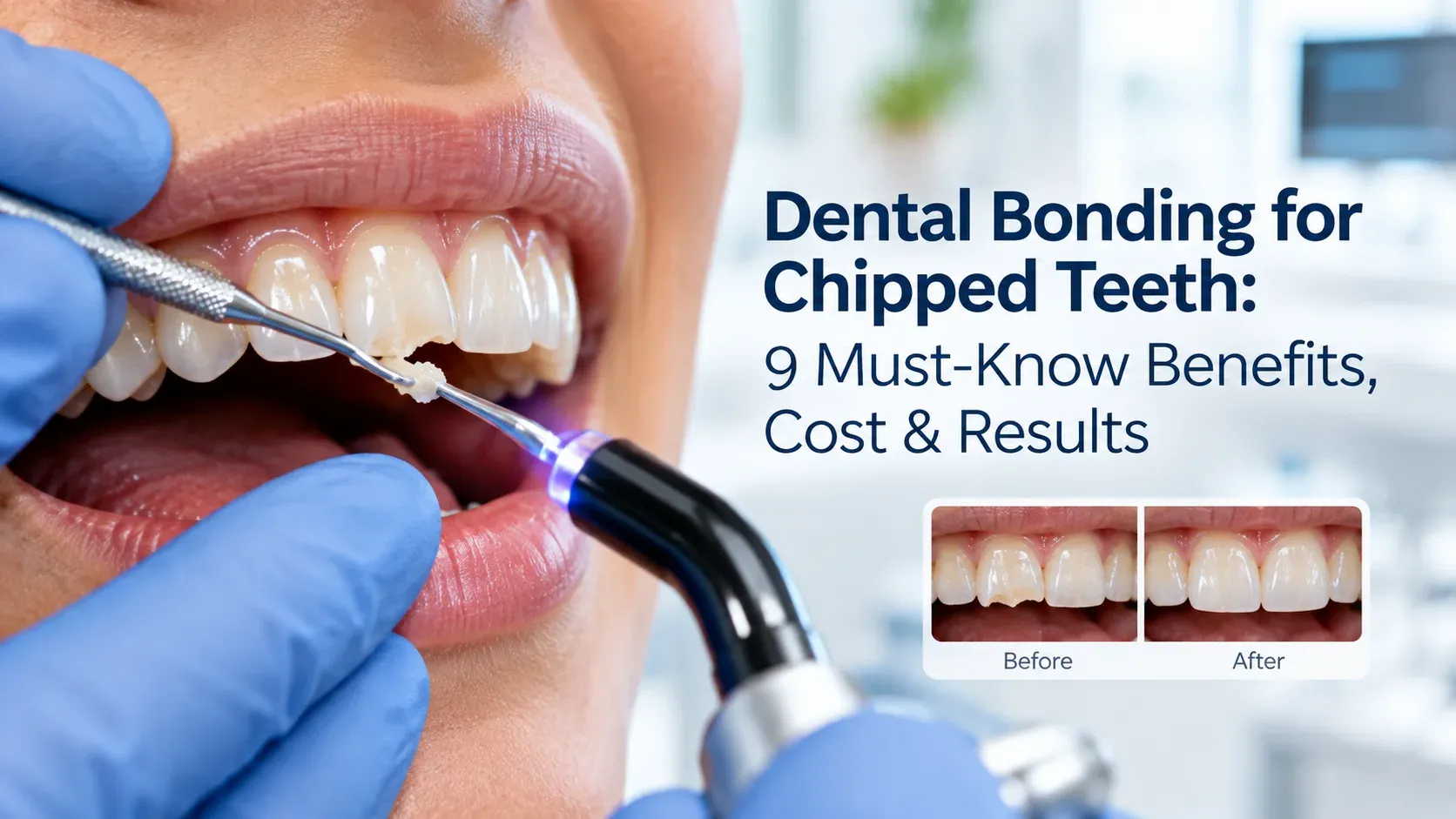
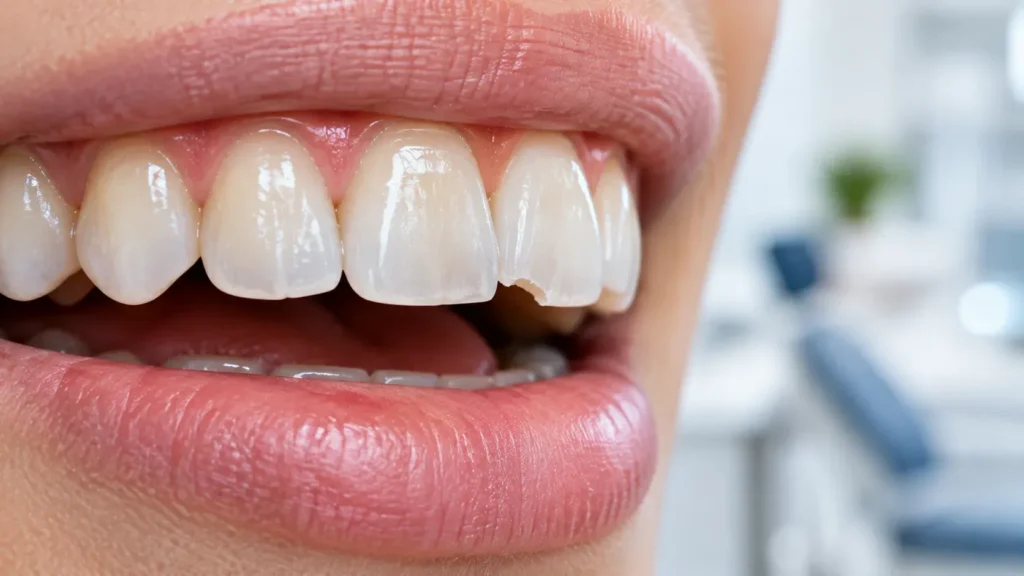
A small chip on a front tooth can be surprisingly noticeable. You may see it every time you smile, or feel a rough edge with your tongue. The good news is that a minor chip does not always require an extensive dental procedure. In suitable cases, a dentist can restore the shape of the tooth using tooth-colored composite resin.
Dental bonding for chipped teeth is a common cosmetic and restorative approach that can repair small imperfections while keeping most of the natural tooth structure intact. The material is shaped directly on the tooth, hardened with a special curing light, and polished to create a natural-looking finish.
But is bonding appropriate for every chipped tooth? How much does it cost, how long can it last, and what happens if the bonding breaks? This guide explains what to expect so you can discuss your options confidently with a dentist.
What Is Dental Bonding for Chipped Teeth?
Dental bonding uses a tooth-colored composite resin to rebuild or reshape part of a tooth. Rather than covering the entire tooth, the dentist applies the material only where it is needed.
For a chipped front tooth, the dentist can use composite resin to recreate a missing section of the edge and then shape it to match the surrounding teeth.
Dental bonding for chipped teeth is particularly useful when the damage is relatively small and the remaining tooth is healthy. The dentist will first examine the tooth and determine whether the chip is purely cosmetic or whether there is deeper damage underneath.
Bonding is sometimes described as a minimally invasive cosmetic treatment because it may require little or no removal of healthy enamel, depending on the individual case.
Can Dental Bonding Fix a Chipped Tooth?
In many cases, yes. Small chips, minor fractures, and uneven edges can often be repaired with composite bonding.
However, the size and location of the chip matter. A small piece missing from the corner of a front tooth may be straightforward to rebuild, while a large fracture extending toward the nerve may require a different treatment.
Before recommending bonding, a dentist may assess:
- How much tooth structure has been lost.
- Whether the tooth is cracked.
- Whether the pulp or nerve is affected.
- The condition of the surrounding gums.
- Your bite and how much pressure reaches the tooth.
- Whether you grind or clench your teeth.
- The appearance and location of the chip.
Dental bonding for chipped teeth is generally most predictable when the tooth has enough healthy structure to support the composite material.
If a chip occurred because of an accident or injury, professional evaluation is especially important. A tooth can sometimes look only slightly damaged while having a deeper crack.
How Does Bonding Repair a Chipped Front Tooth?
The process is usually completed in a dental office and can often be finished during one appointment, although treatment time varies depending on the number and condition of the teeth.
1. Examination and shade selection
The dentist examines the chipped tooth and surrounding teeth. If bonding is appropriate, a composite shade is selected to blend with your natural tooth color.
Shade matching is important because the goal is not simply to make the repaired area white. It should look like part of the original tooth.
2. Preparing the tooth
The tooth is cleaned, and the surface may be prepared so the composite can adhere properly. In many cosmetic bonding cases, only minimal preparation is needed.
3. Applying the composite resin
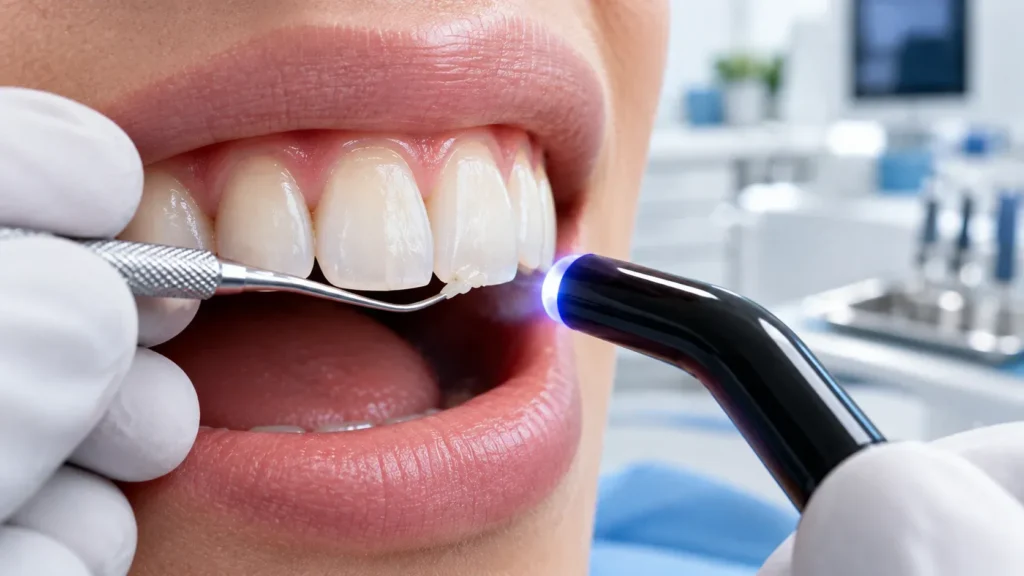
The dentist applies a small amount of tooth-colored composite resin to the damaged area. The material starts out soft, allowing it to be shaped precisely.
4. Shaping the new tooth edge
This is where the dentist’s technique becomes particularly important. The composite is carefully sculpted to recreate the natural contour of the tooth.
The dentist considers the length, width, curvature, and relationship between the repaired tooth and neighboring teeth.
5. Curing the material
A special dental curing light hardens the composite resin. Additional layers may be added if necessary to achieve the desired shape and strength.
6. Finishing and polishing
Once the material has hardened, the dentist trims and polishes it. The final surface should feel smooth and fit comfortably with your bite.
The result should not look like an obvious patch placed over the tooth. Instead, the aim is to blend the restoration with the natural tooth.
What Types of Chipped Teeth Can Bonding Repair?
Not every chip looks the same. The treatment that makes sense depends on the amount and location of damage.
Small chips on front teeth
A small chip along the biting edge of an upper or lower front tooth is one situation where bonding may be considered.
Corner chips
If a small portion of the corner of a front tooth is missing, composite resin can sometimes be added to rebuild the shape.
Uneven tooth edges
Sometimes a tooth has a minor irregularity rather than an obvious fracture. Composite can potentially be used to improve the contour.
Minor cosmetic imperfections
Bonding may also be considered when the tooth has a small defect that affects its appearance but does not compromise its structural health.
Dental bonding for chipped teeth is not designed to replace every type of broken tooth. Significant fractures, large restorations, or teeth with nerve involvement may require more extensive treatment.
9 Benefits of Dental Bonding for Chipped Teeth
Bonding has become popular for minor cosmetic tooth repairs for several practical reasons.
1. It can preserve natural tooth structure
One of the main advantages is that the dentist may be able to repair the affected area without removing large amounts of healthy enamel.
2. It can look natural
Modern composite materials are available in different shades and can be layered and polished to resemble natural tooth structure.
3. It can repair small chips quickly
Depending on the situation, treatment may be completed in one visit.
4. It can be less extensive than some alternatives
For a minor chip, a full-coverage restoration may not always be necessary. Your dentist can determine whether a more conservative approach is suitable.
5. It can improve tooth shape
Composite resin is moldable before curing, allowing the dentist to recreate a missing corner or uneven edge.
6. It can be repaired
If bonding becomes damaged, it may sometimes be repaired or replaced without completely changing the underlying tooth.
7. It can address cosmetic concerns
A small chip can change the appearance of a smile even when the tooth remains functional. Bonding can improve the visible shape of the tooth.
8. It can be used for front tooth repair
Because composite resin can be color-matched and polished, it is commonly used for visible front teeth when the case is appropriate.
9. It may involve less treatment than veneers
Unlike porcelain veneers, bonding generally does not require the same type of enamel preparation. However, treatment requirements vary between patients.
How Much Does Chipped Tooth Bonding Cost?
The cost of dental bonding for chipped teeth varies considerably between dental practices and patients.
Factors that may affect the price include:
- Number of teeth being treated.
- Size of the chip.
- Amount of composite resin required.
- Dentist’s experience.
- Location of the dental practice.
- Complexity of the repair.
- Whether additional dental treatment is needed.
A very small repair may cost considerably less than rebuilding several front teeth.
It is also worth asking what is included in the quoted fee. Some clinics may include consultation, shade matching, polishing, and follow-up adjustments, while others may price these services separately.
Because dental fees vary by country and clinic, getting a personalized estimate from a dentist is more useful than relying on a single online price.
How Long Does Bonding Last on a Chipped Tooth?
One of the most common questions patients ask is how long composite bonding will remain intact.
There is no single lifespan that applies to everyone. Bonding can be affected by biting forces, oral habits, diet, hygiene, the size and location of the repair, and the quality of the original treatment.
Dental bonding for chipped teeth can last for several years in many patients, but the material is not permanent and may eventually need polishing, repair, or replacement.
Front teeth may experience significant daily use, especially if you bite directly into hard foods with them.
Habits such as chewing ice, biting pens, opening packages with your teeth, or repeatedly biting hard objects can increase the chance of damaging the composite.
Regular dental examinations can help identify wear or small fractures before they become larger problems.
What Happens If Dental Bonding Chips or Falls Off?
Composite bonding can occasionally chip or detach. This does not necessarily mean that the original tooth is permanently damaged.
If you notice a sharp edge, sudden change in appearance, sensitivity, or a piece of material has come away, contact your dentist for an assessment.
Do not try to glue the material back yourself.
The dentist may be able to polish the area, add new composite, or completely replace the restoration depending on the condition of the tooth.
After dental bonding for chipped teeth, an unexpected change in the repaired tooth should be evaluated rather than ignored, particularly if the original chip resulted from trauma.
How to Care for a Bonded Chipped Tooth
Good daily habits can help protect composite restorations.
Maintain good oral hygiene
Brush twice daily with fluoride toothpaste and clean between your teeth regularly. Healthy gums and surrounding teeth contribute to a healthier mouth overall.
Avoid biting hard objects
Do not use your front teeth to open packaging or bite pens, fingernails, ice, or other hard objects.
Be sensible with staining foods and drinks
Composite resin can be more susceptible to surface staining than natural enamel or porcelain. Coffee, tea, tobacco, and strongly pigmented foods may contribute to discoloration over time.
Wear a mouthguard when recommended
If you play contact sports or have a habit of grinding your teeth, ask your dentist whether a custom mouthguard would be appropriate.
Attend dental checkups
Your dentist can check the bonded area for wear, staining, fractures, or changes in your bite.
Learning how to care for a bonded chipped tooth can help maintain both its appearance and function over time.
Bonding vs Veneers for Chipped Teeth
If you have a chipped front tooth, you may hear about both composite bonding and porcelain veneers.
Bonding involves applying composite resin directly to the tooth. Veneers are thin coverings, usually made from porcelain or another ceramic material, that are bonded to the front surface of the tooth.
The two treatments differ in several ways.
| Feature | Composite Bonding | Porcelain Veneers |
|---|---|---|
| Material | Composite resin | Porcelain/ceramic |
| Tooth preparation | Often minimal | Usually requires enamel preparation |
| Treatment time | Often shorter | Usually requires more planning and appointments |
| Repairability | Composite can often be repaired | Veneer replacement may be required if significantly damaged |
| Stain resistance | Can stain over time | Generally highly stain resistant |
| Longevity | Varies; often shorter than porcelain | Often longer-lasting when properly maintained |
| Cost | Generally lower | Generally higher |
The appropriate option depends on the condition of the tooth, the size of the chip, your bite, cosmetic goals, and your dentist’s assessment.
Is Dental Bonding Good for a Large Chipped Tooth?
Large chips require more careful evaluation.
If a significant amount of tooth structure has been lost, there may not be enough healthy enamel or dentin to support a simple composite repair. The tooth may also be exposed to greater biting forces.
In such cases, a dentist may discuss alternatives such as a veneer, crown, or another restorative treatment.
The key point is that dental bonding for chipped teeth is not automatically the right solution simply because the tooth is chipped. The extent and cause of the damage need to be assessed first.
If the tooth is painful, highly sensitive, bleeding around the injury, or visibly cracked, seek dental care promptly rather than treating it as a cosmetic issue alone.
Can Bonding Make a Chipped Tooth Look Natural?
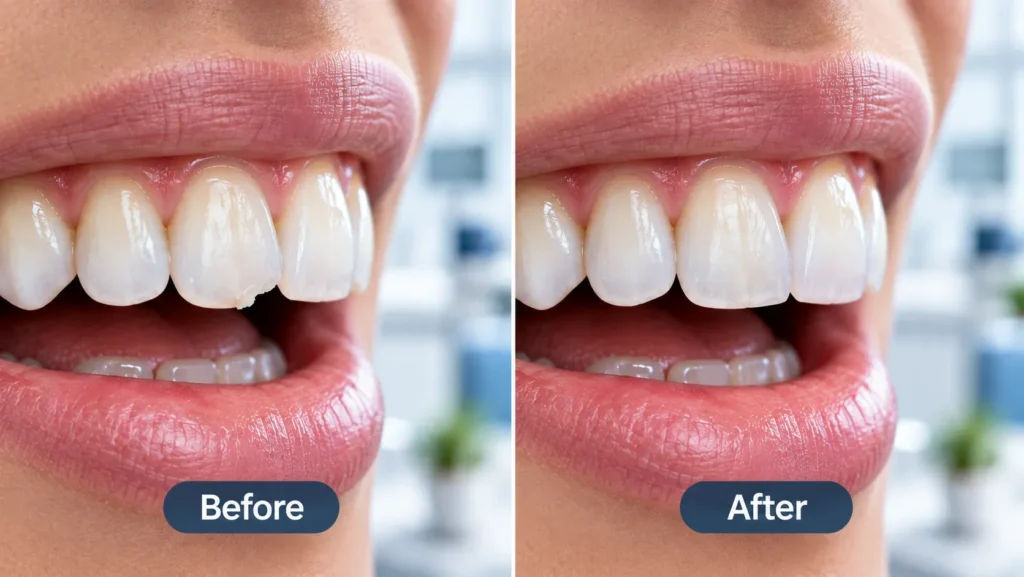
Yes, a well-planned composite repair can blend with surrounding teeth, particularly when the chip is small.
Natural-looking results depend on several factors, including:
- Correct shade selection.
- Proper layering of composite.
- Natural tooth contour.
- Accurate edge design.
- Surface texture.
- Final polishing.
- The dentist’s experience.
The goal is not necessarily to create a perfectly uniform tooth. Natural teeth have subtle variations in translucency, shape, and surface texture.
For dental bonding for chipped teeth, matching these characteristics can make the repaired area less noticeable.
Who Is a Good Candidate for Chipped Tooth Bonding?
A dentist may consider bonding when:
- The chip is relatively small.
- The tooth is otherwise healthy.
- There is no significant untreated decay.
- The bite does not place excessive force on the repair.
- The patient has realistic expectations.
- The tooth has enough structure to support the composite.
However, candidacy cannot be determined from appearance alone. A dental examination is needed to identify hidden cracks, decay, bite problems, or other concerns.
Is Dental Bonding Permanent?
No. Composite bonding is not considered a permanent restoration.
Even when the initial repair looks excellent, normal chewing forces and everyday habits can eventually cause wear, staining, or chipping.
This does not mean bonding is unsuccessful. Like many dental restorations, it requires maintenance and may need repair or replacement over time.
The expected lifespan varies from person to person.
Does Dental Bonding Damage Teeth?
When appropriately planned and performed by a dentist, bonding is intended to restore or improve a tooth rather than damage healthy tooth structure.
One reason dental bonding for chipped teeth may be considered is that it can often be performed conservatively.
However, bonding cannot correct every underlying dental problem. If a tooth has decay, a significant crack, an unhealthy nerve, or an unfavorable bite, treating that issue first may be necessary.
FAQs: Dental Bonding for Chipped Teeth
Can dental bonding fix a small chipped tooth?
Yes. Small chips are often suitable for composite bonding, provided the tooth is healthy and there is enough structure to support the repair.
How much does it cost to bond a chipped tooth?
There is no universal price. The cost depends on the dental clinic, location, size of the repair, number of teeth, and complexity of treatment.
How long does chipped tooth bonding last?
Bonding can last several years, but longevity varies. Good oral hygiene and avoiding habits that place excessive force on the restoration can help protect it.
Can you eat normally after dental bonding?
In many cases, patients can eat normally after treatment, but your dentist may recommend avoiding very hard foods or biting directly on the repaired tooth, particularly soon after treatment.
Can bonding fix a large broken front tooth?
It depends on the extent of the fracture. A large break may require a different restorative approach, so a dentist should examine the tooth before treatment is selected.
Can bonded teeth become stained?
Yes. Composite resin can develop surface staining over time, particularly with frequent exposure to strongly pigmented foods, drinks, and tobacco.
What should I do if my bonded tooth chips again?
Arrange a dental examination. The dentist can determine whether the composite can be repaired or whether another treatment is more appropriate.
Conclusion
A small chip does not always mean you need a major dental restoration. For suitable cases, composite bonding can restore the shape of a tooth while providing a relatively conservative approach to cosmetic repair.
Dental bonding for chipped teeth can be especially useful when the damage is minor, the tooth is healthy, and the goal is to improve the appearance without extensive tooth preparation.
Still, the best treatment depends on the individual tooth. A dentist should assess the size and cause of the chip, your bite, the condition of the surrounding teeth, and your long-term expectations before recommending treatment.
If you are considering bonding, ask your dentist how the repair is expected to look, how long it may last, what maintenance is required, and what alternatives are available. That conversation can help you understand whether composite bonding is appropriate for your particular smile.