 By Hamza@globalarena.org
The afternoon can be one of the busiest parts of your day. You may be finishing work, attending classes, looking after your family, or trying to complete a long list of responsibilities. In the middle of all that activity, taking a few minutes to reconnect with Allah can bring a sense of purpose and help you refocus on what matters.
In Islam, afternoon prayer generally refers to Asr salah, the fourth of the five obligatory daily prayers. It reminds Muslims to maintain their connection with Allah even when daily responsibilities become demanding. Understanding its timing, rakats, and method can make the prayer easier to incorporate into everyday life.
Whether you are learning to pray for the first time or simply want to strengthen your routine, this guide explains the essentials in straightforward language, including common mistakes, practical scheduling advice, and answers to frequently asked questions.
What Is Afternoon Prayer in Islam?
The afternoon prayer in Islam is known as Asr salah. It is one of the five daily obligatory prayers that structure a Muslim’s day around worship, remembrance, and accountability to Allah.
The five obligatory prayers are Fajr, Dhuhr, Asr, Maghrib, and Isha. Each has its own prescribed time, so Muslims do not simply pray whenever it is convenient. Instead, they make room for worship within the appropriate prayer window.
Asr falls after Dhuhr and before Maghrib. Its timing connects the late afternoon with a moment of reflection before the sun sets. For someone occupied with work or study, this can be a useful reminder to pause, fulfil an obligation, and return to the rest of the day with renewed attention.
Why does Asr matter?
The Quran emphasizes the importance of guarding the prayers, including in Surah Al-Baqarah 2:238. Islamic teachings also give particular attention to the middle prayer, which many scholars identify as Asr.
The lesson is practical as well as spiritual: prayer should not be neglected simply because the day becomes busy.
Asr is not a replacement for personal supplication, reflection, or other acts of worship. It is a specific obligatory salah with its own time and method. Understanding that distinction helps you approach it with both sincerity and care.
Asr Prayer Time: When Does It Begin and End?
Knowing the correct prayer window is essential. Unlike a meeting that can be moved to another hour, each obligatory salah has a prescribed time.
Asr generally begins in the afternoon when an object’s shadow reaches a specified length beyond its shadow at solar noon. The calculation differs between recognized Islamic jurisprudential schools.
- Hanafi method: Asr generally begins when the shadow reaches twice the object’s height, beyond the noon shadow.
- Shafi, Maliki, and Hanbali methods: Asr generally begins when the shadow reaches the object’s height, beyond the noon shadow.
These are simplified descriptions of the commonly used calculations. Local prayer timetables account for the sun’s position and other calculation details.
How late can you pray?
Asr must be performed within its prescribed window, which extends until sunset. However, Muslims are encouraged to pray it promptly rather than deliberately delay it until the sun is about to set.
The Prophet Muhammad ﷺ warned against neglecting Asr, emphasizing its seriousness in authentic hadith literature.
If you follow a local mosque’s timetable, check which calculation method it uses. You may notice that two reputable apps display different start times. That difference does not automatically mean one is incorrect; they may be using different recognized methods.
For accurate daily timings, consult your local mosque or a trusted prayer-time service. A timetable for Lahore, for example, will not necessarily match one for Karachi or another city because location affects solar calculations.
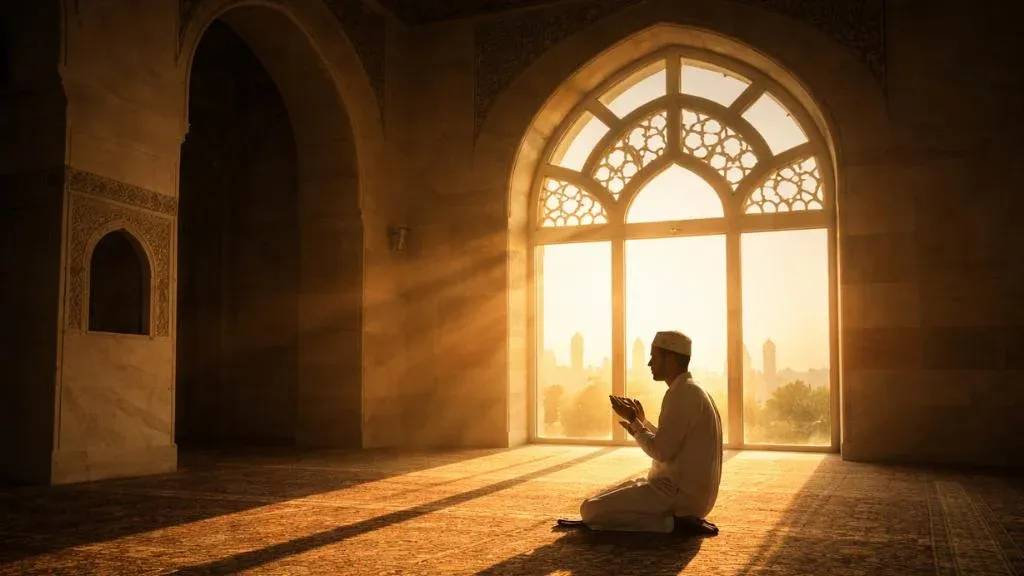
How Many Rakats Are in Asr Prayer?
The obligatory Asr salah consists of four fard rakats. A rakat is one unit of prayer that includes standing, Quranic recitation, bowing, and prostration in the prescribed sequence.
You may also hear about four sunnah rakats before the obligatory prayer. These are commonly described as voluntary sunnah prayers, and their status differs from the four fard rakats that every eligible Muslim is required to perform.
Here is a simple breakdown:
| Prayer component | Number of rakats |
|---|---|
| Voluntary sunnah before Asr | 4, optional |
| Obligatory fard prayer | 4, required |
The four voluntary rakats before Asr are not obligatory. They are commonly regarded as recommended or meritorious voluntary worship, with details varying across scholarly traditions.
If you are a beginner, focus first on learning the four obligatory rakats correctly. Once you feel confident with the required movements and recitations, you can learn more about voluntary prayers from a trusted teacher.
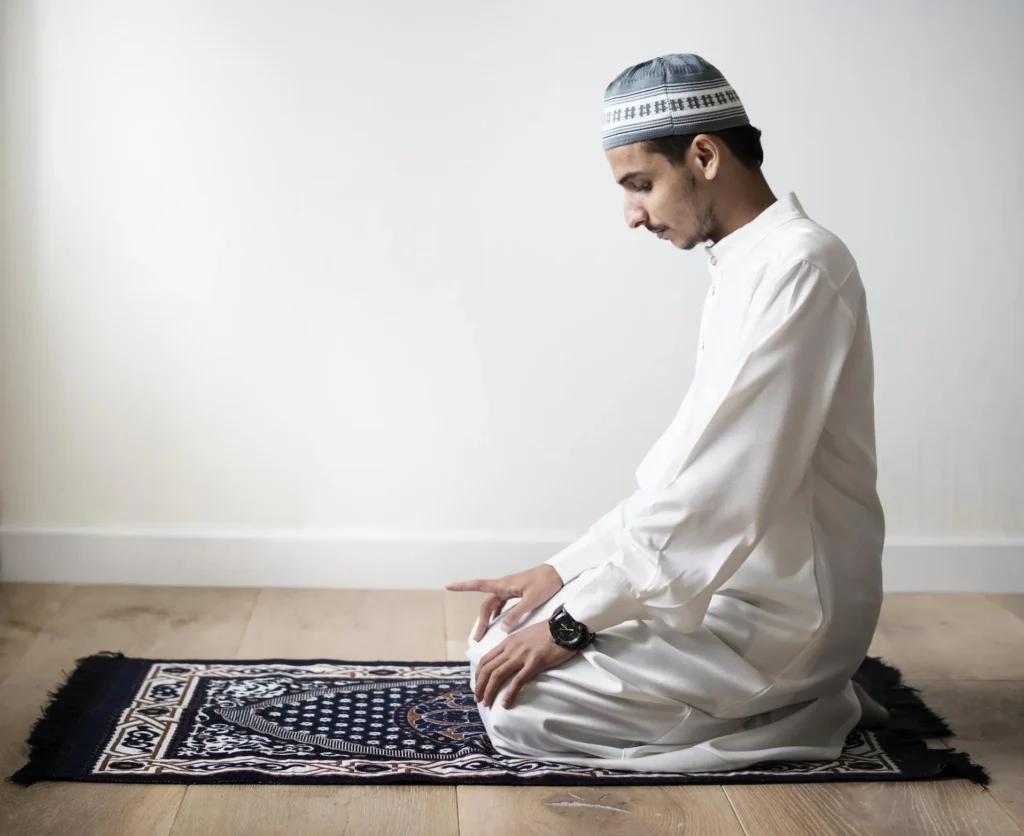
What happens during the four obligatory rakats?
In a standard four-rakat obligatory prayer, you stand for recitation, bow, rise from bowing, and perform two prostrations in each rakat.
In the first two rakats, you recite Surah Al-Fatihah followed by another portion of the Quran. In the third and fourth rakats of the obligatory Asr prayer, the usual practice is to recite Surah Al-Fatihah. Certain details can vary according to the school of jurisprudence you follow.
At the appropriate point, you sit for the tashahhud, complete the remaining movements, and finish with the salam.
Learning the order gradually is more helpful than trying to memorize every detail at once. If you are unsure about a movement or recitation, ask a knowledgeable local imam or qualified teacher to demonstrate it.
How to Perform Afternoon Prayer Step by Step
Learning the movements becomes easier when you approach the prayer as a sequence rather than a collection of unfamiliar actions. The same basic preparation applies to afternoon prayer as to the other obligatory salah.

Step 1: Prepare for prayer
Make sure you have wudu, your body and clothing are clean, and the place where you intend to pray is suitable.
Wear clothing that meets the requirements for salah, identify the direction of the Qiblah, and check that the prayer time has begun according to the method you follow.
Step 2: Make your intention
Form the intention in your heart to perform the four obligatory rakats of Asr for Allah. A spoken formula is not universally required; the essential point is the intention itself.
Stand facing the Qiblah and begin the prayer with Takbirat al-Ihram by saying “Allahu Akbar.”
Step 3: Complete the first rakat
Recite Surah Al-Fatihah and then another passage from the Quran. Bow in ruku, rise to a standing position, and perform the two prostrations, sitting briefly between them.
Move through each position calmly and in the proper order. Avoid rushing so much that the required stillness of the prayer is lost.
Step 4: Perform the second rakat
Stand for the second rakat and recite Surah Al-Fatihah followed by another passage of the Quran. Complete the bowing and prostrations as before.
After the second rakat, sit and recite the tashahhud according to the method you have learned.
Step 5: Complete the third and fourth rakats
Stand again and complete the third and fourth rakats. In the usual method for the obligatory Asr prayer, Surah Al-Fatihah is recited in each of these rakats.
After the fourth rakat, sit for the final tashahhud and the prescribed concluding supplications, including salawat upon the Prophet ﷺ, according to the method you follow.
Finish the prayer with salam.
A helpful reminder: This is an overview, not a substitute for learning the full prayer. Details such as hand positions, the exact wording of recitations, and some movement practices differ among recognized schools. A reliable teacher can help you learn the method consistently.
The Spiritual Importance of Asr Salah
A prayer’s value is not measured only by how quickly you complete it. Attention, sincerity, and a genuine effort to fulfil your obligations all matter.
Asr arrives during a part of the day when your attention may be divided. Perhaps you are thinking about an unfinished assignment, an approaching deadline, or something you need to do at home. Making space for salah reminds you that daily responsibilities and spiritual responsibilities can exist alongside each other.
The Quran repeatedly encourages believers to remember Allah and maintain their prayers. In Surah Al-Asr (103:1–3), Allah draws attention to the passage of time and the importance of faith, righteous deeds, truth, and patience.
Although Surah Al-Asr is not a specific set of words required during this prayer, its message offers a useful reflection: time passes quickly, and the way we use it matters.
How prayer can shape your afternoon
A regular prayer routine can encourage you to pause, review your priorities, and return to your responsibilities with greater intention. This is a personal benefit rather than a guarantee that every problem will disappear.
For example, a student who has spent hours preparing for an examination may use prayer as a reminder to step away briefly, fulfil a religious obligation, and resume studying afterward.
Similarly, someone managing a busy household can make a deliberate space for worship rather than waiting for an unusually quiet day.
The purpose of afternoon prayer is first and foremost to worship Allah as prescribed. Any sense of calm, renewed focus, or reflection you experience can accompany that worship, but it should not be treated as a guaranteed outcome.
Common Challenges and How to Manage Them
Many people understand why salah matters but struggle to maintain a consistent routine. The solution is often to plan for predictable obstacles instead of relying entirely on memory.
When work or school gets busy
Check your local prayer timetable at the beginning of the day. If you have meetings or classes during the afternoon, identify a suitable break and a clean, private place where you can pray.
Where possible, speak respectfully with your manager, teacher, or administrator about reasonable arrangements. A brief explanation and advance planning can prevent unnecessary stress.
When prayer apps show different times
Check the calculation method and location settings. Different jurisprudential methods, calculation settings, or location information can lead to different displayed times.
If you follow the Hanafi school, use a timetable that clearly identifies the Hanafi Asr calculation. If you follow another recognized school, use guidance consistent with that practice.
Do not assume that the earliest displayed time is automatically suitable for you.
When you forget or miss the prayer
If you miss Asr, do not simply abandon it because the time has passed. Islamic guidance generally requires a missed obligatory prayer to be made up as soon as reasonably possible when remembered, subject to the applicable rules.
If you repeatedly miss prayers because of a demanding schedule, review what is causing the problem. You might need a reminder, a change to your break routine, or a better understanding of the prayer window.
For specific questions about exceptional circumstances, travel, illness, menstruation-related rulings, or the rules governing missed prayers, consult a qualified scholar.
Afternoon Prayer and Your Daily Routine
Consistency often comes from making a plan that works with your actual life. If you wait until every task is finished, the afternoon may pass before you find a suitable moment.
Instead, connect afternoon prayer with a part of your normal schedule. You might check the timetable after breakfast, set a reminder before your usual break, or keep a clean prayer mat in a suitable place.
Here are a few practical habits to try:
- Plan ahead: Check the day’s prayer times before work or school begins.
- Prepare your essentials: Keep what you need for wudu and prayer accessible.
- Allow enough time: Avoid scheduling tasks so tightly that you must rush.
- Learn the rulings: Understand your school’s guidance on timing, travel, and missed prayers.
- Build consistency gradually: If you are learning, focus on establishing the obligatory prayer correctly.
If you are a new Muslim or returning to regular worship after a long break, give yourself time to learn. You do not have to understand every scholarly detail on your first day. Begin with reliable guidance and seek help whenever something is unclear.
The goal is to fulfil the prayer properly, not to turn your schedule into another source of unnecessary pressure.
Afternoon Prayer Duas and Personal Supplication
Many Muslims want to know which dua they should recite after Asr. The answer depends on whether you mean the required words within salah or personal supplication made afterward.
During the obligatory prayer, follow the prescribed recitations you have learned. After completing salah, you may engage in established post-prayer remembrance and make personal dua, asking Allah for guidance, forgiveness, patience, and help with your responsibilities.
There is no need to believe that one special, unverified formula must be recited for your supplication to matter.
For example, you might ask Allah to help you speak kindly when you are frustrated, make sound decisions at work, care for your family, or remain patient during a difficult period. You can also pray for others who are facing hardship.
Personal supplication can be made in your own words, although the rules concerning language within the formal salah itself are a separate matter and should be learned from a trusted scholar.
Remember, afternoon prayer is an act of worship, not a formula for controlling outcomes. Make dua sincerely, take appropriate practical steps, and leave the results to Allah.
FAQs: Afternoon Prayer
1. What is the afternoon prayer called in Islam?
The Islamic afternoon prayer is called Asr salah. It is the fourth of the five obligatory daily prayers, performed after Dhuhr and before Maghrib. Its prescribed time depends on the sun’s position and the recognized calculation method followed by your local mosque or prayer timetable.
2. How many rakats are in the afternoon prayer?
The obligatory Asr prayer consists of four fard rakats. Some Muslims also perform four voluntary sunnah rakats beforehand. These voluntary rakats are not obligatory, so beginners should first focus on learning the required four rakats correctly.
3. What is the best time to perform Asr?
The best practical approach is to perform Asr promptly after its prescribed time begins, rather than deliberately delaying it toward sunset. The exact starting time varies by location and jurisprudential method. Consult a reliable local timetable that matches the method you follow.
4. Can I pray Asr at work or school?
Yes. You can perform salah at work or school when the prayer time has begun, provided the necessary conditions for prayer are met. Find a clean, suitable space, plan around your responsibilities, and allow sufficient time for wudu and the prayer itself.
5. What should I do if I miss Asr prayer?
If you miss an obligatory prayer, seek reliable Islamic guidance about making it up and act promptly when you remember. The applicable details can vary according to circumstances. If missing prayers has become a regular problem, a qualified scholar can help you understand the relevant rulings and establish a workable routine.
Conclusion
The afternoon can pass quickly, especially when work, education, family commitments, and everyday responsibilities compete for your attention. Establishing a regular prayer routine helps you give worship its rightful place within the day.
Understanding afternoon prayer begins with learning Asr’s prescribed time, the four obligatory rakats, and the correct sequence of movements and recitations. From there, you can build a practical routine around your circumstances while seeking reliable guidance about questions that depend on your school of jurisprudence.
You do not need to make your schedule perfect before you begin. Start by checking your local prayer timetable, preparing a suitable place for salah, and learning any part of the prayer that remains unfamiliar. If you have questions about timing or missed prayers, ask a knowledgeable and trusted scholar.
Your next step: Check today’s Asr time in your local mosque’s timetable and make a simple plan to pray within the prescribed window. Small, consistent efforts can help you build a more dependable worship routine.